Showing posts with label Breast Cancer Awareness. Show all posts

Wednesday, October 26, 2011

Breast Cancer Screening Update

In 2009, the US Prevention Service Task Force (USPSTF) a government agency, issued new recommendations  for mammograms and breast cancer screenings. This controversial new recommendation suggested women younger than 50 without a family history of breast cancer didn't need an annual mammogram. They also recommended that screening exams for women between 50 and 74 were needed every OTHER year, not annually. This reversed the USPSTF's 2002 recommendations and went against the American Cancer Society and the American College of Radiology, both of which recommend baseline mammograms at age 35 and annual screenings of ALL women after age 40. There's also no cut off age, as healthy women in their  early to mid 80's should still have mammograms.
The USPTF's recommendations to NOT screen before age 50 was based on a study that showed screening 1,330 women over age 50 saved one life but it took 1,904 screening mammograms to save the life of one woman in the 40-50 age group.  Hmm. I'm betting that one woman was damn glad she got screened!
The agency also suggested that screening led to false positives which then led to negative biopsies. They implied the biopsies were unnecessary. I don't know about you, but I'd rather have 4 negative biopsies than 1 positive one. Oh. Wait. I've had one of each. And let me tell you, after being diagnosed with breast cancer in 2007, I was relieved my 2008 biopsy was negative. 

The thing is, doctors are not going to biopsy women willy nilly. If a doctor recommends a biopsy, it's because the radiologist saw something suspicious in the breast. It may turn out to be a cyst, lipoma, fibroadenoma, inflammation, or fibrocystic changes. But it could also be cancer. I'm not willing to bet my life on it and I don't think most informed women would either.
The truth is, doctors have been ordering mammograms since the 1940's but it wasn't until the 1990's that the government (and insurance companies) recognized the need for early detection and the need for screening mammograms.  From 1940 to 1990, the death rate from breast cancer remained unchanged. From 1990 to present day, more women are getting screening mammograms and the death rates from breast cancer have decreased by 30%. That in itself says a lot about the need for early detection. Also, breast cancer is usually more aggressive in women younger than 50. 

Honestly, I think extending the life expectancy of everyone is a good idea, but it is an especially good idea for women under 50. Early detection saves lives and women in a breast cancer screening program who are diagnosed with breast cancer are more likely to be diagnosed in stage one than women who find a palpable lump. Any woman who has annual clinical breast exams and a mammogram is in a breast screening program. And the program works better if the patient has their mammogram at the same facility each year. 
If you decide to change facilities, remember to have your prior mammograms sent to the new facility.
Many doctors have chosen to ignore the US Prevention Service Task Force's mammogram recommendation. Unfortunately, the task force recently denounced self-breast exams. The agency claimed women didn't know how to do them and would therefore, stress needlessly if they found a lump that was actually normal glandular tissue. Now imagine how much more stress those women would undergo if they followed the government guidelines and stopped doing self-breast exams and were later diagnosed with breast cancer after the doctor found a palpable lump on clinical breast exam. I'm betting most women would rather find a lump that wasn't a lump than not find a lump that was cancer.

So please, follow the recommendations of The American Cancer Society, The American College of Radiology, The FDA, and a mammogapher who happens to be a breast cancer survivor. If you are older than 20, do self breast exams. If you are older than 25, have your doctor or medical health provider do a clinical breast exam each year. If you are 35, have a baseline mammogram and then once you turn 40, have a mammogram every year. If you find a lump, have unilateral nipple discharge that is bloody or green, see your doctor. If you have a mother diagnosed with cancer before age 50, subtract 10 years from her age and that is when you should have your first mammogram.
Know your breast. Be informed. And get screened!

Friday, October 21, 2011

Conquering the Abyss by Mackenzie Crowne

Today's blog needs little introduction. So, I will just say thank you to my new cyber friend and fellow TWRP author, Mackenzie Crowne.

Cancer. 
Though it’s not a four-letter word, it sure conjures up a lot of them.  Fear, sick, pain, loss, hell, dead, you get the drift.  I can’t tell you the first four-letter word that popped into my mind when I got the call diagnosing me with stage-three breast cancer.  My mother would wash out my mouth with soap. 
At the time I was a healthy forty-seven years old.  I’d been married to a great guy — since about the end of the bronze age — we’d raised two wonderful boys to special men, and I’d just become a grandmother.
It was October.  You know — Breast cancer awareness month.  Suddenly everywhere I looked there were pink ribbons, and survivors were coming out of the woodwork like members of a secret society, calling to me to enter into the fold.  But I didn’t feel I belonged.  I wasn’t anything like those women.  They danced, victorious on the other side of an abyss, while I staggered under quiet disbelief.
I’m normally a, the glass is half-full, kind of woman, but these circumstances weren’t normal.  My glass had dropped to the floor, shattering into a thousand different pieces, a thousand different emotions.  I was overwhelmed, and no amount of superglue, or duct tape, was going to put my glass back together.
Some wise person once said, ‘Life happens.  It’s time to pull on your big girl panties and deal with it.’
Big girl panties in place, I took those first, staggering steps toward survival. Three life-altering years later, I have somehow found my way from cancer patient to survivor.  I didn’t do it alone.
My family and friends were there for me as I went through double mastectomies, chemotherapy, radiation, and numerous reconstructive surgeries.  They were there for me when I was scared, when I hurt so badly I cried, when I lost my hair, and when I was too sick to stand.  I can’t express how blessed I am to have them all in my life.
Having said that, the one thing they couldn’t do was fight the battle for me.  I had to do that on my own.     In an effort to remain sane in the midst of insanity, I relied on many different internal forces.  There are too many to mention here.  The following are the top three on my list of lifesavers.

Number one is my faith.
 
Don’t get me wrong, I don’t mean to belittle the many doctors, nurses, and other health care professionals I’ve become acquainted with in the past three years.  I’ve met some very talented, very dedicated people.  But even as well-trained as they all are, what they do is not an exact science.  They couldn’t give me assurances.  The best they could do was increase the odds of my survival.  I needed those assurances.  I found them in my faith. 
I can’t tell you how many times I climbed into God’s lap, spiritually speaking, to rest in the confidence of His love. I think of the practice as slipping into Scarlett O’Hara mode. 
‘I can't think about that right now,’ Scarlett said. ‘If I do, I'll go crazy. I'll think about that tomorrow.’
Scarlett, I know the feeling. 
I was Scarlett so often during the past three years, I may as well have been wearing a dress made out of drapes.  I think I even started to speak with a southern accent.  As long as I didn’t have any cancer related appointments on my calendar that day, I handed future stresses to God, and considered myself on cancer vacation. 
Thank you, God, and thank you, Scarlett.

Number two is remembering to laugh.

Chemo days- Mac with her granddaughter.
Many of the things I heard during my battle were ridiculous.  Like the day I was asked, ‘When would you like to start chemo?’  Um, let me think.  Never?  Others things were downright funny.  Believe it or not, I am a woman who was once asked the question, ‘Where would you like your nipple?’
Then there was the day I was changing clothes in front of a mirror and noticed a dime sized blood-blister at the center of one of the incisions from reconstructive surgery.  It was on the side where I’d had radiation, and my first thought was, Oh crap, what now?
My daughter-in-law took one look, and said, ‘Mac, that isn’t a blood blister.  That’s your implant!”
By ten that morning, I was booked for emergency surgery.  I’d already spoken to the doctor, the hospital, and my insurance company when the phone rang.  The call was from my plastic surgeon’s office assistant.
‘We have a problem,’ he said.                                     
‘What’s that?’
He went on to explain that the implant contact at the hospital was on vacation, so he hadn’t been able to procure the new implant I would need.  They had implants on hand at the office, but with the doc in surgery all day, he wouldn’t be returning there before he was to meet me later that afternoon.  A courier could be called, but we’d be cutting it close, time wise.
‘So, you want me to come get the implant?’ I asked.
‘I can’t believe I’m asking this, but yes.  Would you mind?’
I could have said no, and let a courier deliver it, but hey, how many woman can say they’ve driven across town with their boobs in the passenger seat?  So, I walked into the hospital with my new boob, and two spares, in a box.
‘What have you got there?’ the registering nurse asked as he led me back into pre-op.
‘I picked up the new implant from the doc’s office,’ I explained.
He opened the box and looked inside, the looked up, confused.  ‘There are three in here.’
“Yeah, well,’ I said.  ‘I think the doc is planning to make me into a Picasso.’
Remember to laugh.

Number three is the keeping of a journal.
 
As a writer, I suppose writing down my thoughts was a natural thing for me to do, but I’d never actually kept a journal before.  The daily focus helped me deal with the wild swing of emotions I was experiencing.  It also had an unexpected benefit. 
Shortly before I began chemotherapy, I read back over my entries from those first few weeks.  I was concerned at what I found.  The entries documented my nearly complete absorption in the diagnosis.  It was as if my real life, the one that had come to a screeching halt with that fateful phone call, had all but disappeared. 
My words described the thoughts and fears of a victim.  I had become a woman with a dark present, and a bleak future.  Externally, I was waging battle.  I had chosen the most invasive of surgeries, and the most aggressive of treatments, but internally, I seemed to be embracing defeat.
In contrast, interspersed throughout the dark entries in my journal, were a handful of positive memories that stood out like bright beacons of light.  I was drawn to them.  They were glimpses into the soul of the woman I used to be, before the diagnosis had left me paralyzed.
Disgusted, I made an effort to find more of those moments; like my wonder at the rainbow off my back patio one morning, or the beauty of the hummingbird that visited the feeder several times a day, or my laughter at some silly comment my granddaughter had made.
If you’ve received a similar diagnosis, I know what you’re thinking.  Really, lady?  You’re telling me to look for rainbows, hummingbirds, and silly comments from a toddler?  I’m facing having a chunk of my breast removed, or the whole of it, and having toxic chemicals shot through my veins until I’m so ill I can hardly stand. 
Yes, you are, and I’m the first one to agree, that sucks.  But if you’re going to beat breast cancer, treatment is an inescapable fact.  There’s no getting around it, and no matter what protocol is prescribed, some of it won’t be pleasant. 
The next year, at least, is going to be jammed full of cancer related appointments, constantly reminding you of your diagnosis.  The cancer battle can easily become a vortex, sucking you in, until nothing else exists.  It’s debilitating and demoralizing, and human nature being what it is, it’s very easy to let yourself come to be defined by your cancer. 
But by definition, fighting cancer is a battle.  I didn’t want it to be my cancer.  I wanted to defeat it.  I wanted it gone. 
It may seem insignificant to focus on the flight of a hummingbird in the midst of mastectomies and toxic treatments, but amazingly, focusing on the world beyond the vortex reminded me there was a whole existence out there that had nothing to do with cancer.  It was a turning point for me.  Thanks to those little blips of joy life delivered, I began to claw my way back from the dark, and I was able to take those first tentative steps toward the other side of the abyss.  Toward victory.

As I write this, it has been almost four years since I found the lump that changed my life.  It’s been a long and arduous adventure.  I’ve experienced a range and intensity of emotions I never expected, and if you’ve received a similar diagnosis, you will as well.  If you’re like me, you’ll know disbelief and fear, anger and frustration, but you’ll also know humor and hope.
Yes, being diagnosed with breast cancer is devastating. Yes, it’s frightening, and the treatment is horrendous.  And yes, my life has changed.  So will yours.
Keep in mind that not all changes are bad.  Facing this kind of illness strips you down to the bare bones of life, and forces you to focus on what is important.  In my case, that change has been a positive development on so many levels.
It goes without saying that family and friends come first, but since my diagnosis, I’ve also learned to allow myself my dreams.  These days, I treat my love of writing with more respect.  Five manuscripts later, six actually, as I finished another just this week, I’m seeing results.  GIFT OF THE REALM, my first published novel, will be available this spring through The Wild Rose Press, with more to come.   

I’ve met many women who have gone before me, and many of them faced this disease without the incredible medical and technical advances that we have at our disposal today.  If there is one common characteristic I’ve seen in all the survivors I have met, it would be strength. 
If you are just beginning your walk through this frightening disease, you probably don’t feel strong.  Don’t beat yourself up if that is the case.  You’ll get there.
Remember that everything they throw at you is doable.  Take cancer vacations as often as possible.  Allow yourself to take things one-step at a time, and try not to stress over what comes next.  It will come whether you stress over it or not. 
Remember to laugh, and try Scarlett on for size.  She not only dressed well, she was a smart woman.  Lastly, whether you know Him or not, God knows and loves you, and hears your pleas.  His lap is always available. 
Mac today, posing with a good friend.
So, close your eyes, take a deep breath, and take that first step toward conquering the abyss.  I’m dancing on the other side.  I’ll see you there.

Mac
You can find Mackensze on Facebook at
https://www.facebook.com/profile.php?id=100002947742754

And coming this spring, her first published novel, 
Gift of the Realm will be available from The Wild Rose Press.

Friday, October 22, 2010

Running on Pink

I can't say it enough. Early detection means a cure. Five year survival rates for breast cancer detected early in women over 45 is around 98%. And according to guidelines set forth by The American Cancer Society women who are asymptomatic should follow the recommendations found at: http://www.imaginis.com/breast-health/guidelines-women-should-follow-for-early-detection-of-breast-cancer-2
  • Women 20-39 should have a physical examination of the breast (CBE or clinical breast exam) at least every three years, performed by health care professional such as a physician, physician assistant, nurse or nurse practitioner. CBE may often be received in the same appointment as a Pap smear. Women 20-39 should also perform monthly BSE.(Breast Self Exam)
  • Women 40 and older should have a physical examination of the breast (CBE or clinical breast exam) every year, performed by a health care professional, such as a physician, physician assistant, nurse or nurse practitioner. CBE can often be performed in the same visit as a mammogram. Monthly BSE should also be performed.
  • Women 40 years of age should receive a screening mammogram every year. The National Cancer Institute recommends mammography every one to two years for women between 40-50 years of age. Beginning at age 50, screening mammography should be performed every year.
The most recent and comprehensive research on breast cancer detection clearly indicates that regular mammogram screening saves lives, reducing the rate of death from breast cancer by an average of fifteen percent. The American Cancer Society and Mayo Clinic recommend that all American women begin scheduling routine mammograms at age forty.

Today's blog guest is author Lynne Roberts who was touched by breast cancer after her grandmother's diagnosis. But before we talk about Lynne's grandmother and how the disease affected Lynne. Let's find out a bit more about one of The Wild Rose Presses newest authors.

Lilly-
Lynne tell us a bit about your new release, First Date and After Hours. Can you give us a blurb and excerpt from each book

Lynne-
Thank you, Lilly. Well, I’m cheating. They’re not really new releases, FIRST DATE came out a year ago this month and AFTER HOURS released in early December, but it will be a few months before I have anything new on the cyber shelves. FIRST DATE will always have a special place in my heart because it was my first work of erotic fiction. AFTER HOURS is… well, David is one of those characters you wouldn’t mind meeting in real life.
FIRST DATE blurb:
The real estate market is about to heat up.

When Bret Jacob walks into Jill's real estate office, she attempts to maintain a professional demeanor, but memories of accidental voyeurism in high school, years of what-if's, and Bret's drop-dead sexy grin only serve to ignite her fantasies.

Bret needs a farm for his growing landscape business. When he sees Jill Daniels' picture in a real estate ad, he can't believe his eyes: The shy girl from high school has blossomed into a desirable woman. Ten years ago, she didn't stir his blood and drive away all rational thought; now, he's fighting the urge to take her in his arms long enough to ask her on a first date.
FIRST DATE excerpt:
Bret stood inside the door, and she drank him in. His white button-down shirt opened at the neck, accentuating his square jaw and doing nothing to disguise his well-muscled chest. Faded denim wrapped long powerful legs, and she forced her gaze not to linger on the pronounced bulge between them, her mouth filling with saliva at the thought of what lie beneath the denim like a present waiting to be unwrapped. He was tall, muscular and comfortable in his own skin. She’d bet he’d never had an awkward moment in his life. If anything, he looked better than he had in high school.

She blinked, breaking the spell and walked forward, extending her hand. “Good morning.” Her voice quivered a little. “I’m Jill Daniels.”

His hand enfolded hers, his fingers warm and slightly calloused. The contact pebbled her skin, sending shivers rippling over her body. “I remember you.”

Deep and seductive, his voice caressed her body like a physical touch, sending a jolt of pure need straight to her core. He remembers me? Bret released her hand and Jill rubbed a thumb over her now-tingling palm, her skin awake and yearning for those roughened hands to touch more.

Bret’s brilliant gray-blue eyes were now creased at the corners and golden highlights lightened his sandy brown hair as though he spent a lot of time outdoors. The slow, sexy smile hadn’t changed. If anything, it had gained potency.

“I’m Bret Jacobs,” he added.

She reminded herself to smile. “I remember you, too.”

“Well, good, I was afraid...” He left the thought unfinished.

Did he honestly think anyone would forget him? And was that a blush? Did he remember the party, too? He couldn’t. The image of Bret she occasionally used for her late-night showers filled her mind and a shockwave of desire stole her breath. Oh, God, she should have brought a change of underwear.

Bret smiled and Jill’s heart dropped into her stomach.

“So, are you ready?” he asked.

More than you’ll ever know. “Yes.”


AFTER HOURS blurb: Elle Simpson doesn’t deny that the new intern is sexy as hell but he’s also ten years her junior--and she doesn’t date men from the office. Of course, dating isn’t what comes to mind when David Nelson enters a room. When Elle’s boss assigns her to work an important account, she’s thrilled—until David volunteers to help. Working one on one with her desirable new assistant is bound to test the limits of her restraint.

Everything about Elle, from her professional savvy to her hot body, turns David on, but first he has to unravel her mixed signals. After a few late nights alone with Elle in the office, David is at the end of his tether. It was hard enough during the day; keeping his hands off her after hours is proving impossible.
AFTER HOURS excerpt:

Some men simply walk across a room, but not David.

Elle Simpson watched from her office as the new intern, his hips moving in a predatory roll, strolled to the copier and stood with his back toward her. No, not David.

She felt the color rise in her cheeks as her gaze traced his body, from the dark hair just curling at the nape of his neck, past wide shoulders, to the dangerous-looking narrow hips and an ass made for grabbing. Her body warmed and her inner thighs began to tingle.

David turned, as though he could sense her scrutiny, and flashed a smile that could short-circuit a city. Hell, it certainly did a number on her. Elle swallowed, hiding behind a noncommittal nod, and hoped she gave the impression she was too busy for pleasantries. Damn. She needed to be more careful.

After many years with the company, she’d earned her reputation as a dependable, hardworking, no-nonsense kind of woman. She grimaced. What would her fellow employees think if they knew every time David Nelson walked in the room, Elle’s synapses stopped firing as all the blood left her head to settle between her legs? She shifted on her chair and the friction caused her pussy to ache, reminding her of its neglected state.

Evidently finished with the copier, David gathered his papers and walked back to his cubicle. Elle tilted her head to better watch him walk down the hall. A damn sexy man. Perhaps he’d been born with some sort of exclusive hip design. It would explain the fluidity of movement.

Elle shrugged. One thing was certain—when David walked into a room, or out of it, he had her undivided attention. She didn’t think he was trying to be sexy, or if he was, the effort had become, well...effortless. There was just something in the way those well-oiled hips moved that made her wonder what else they could do.


Lilly-
They sound like great stories. Where can readers find them? Is there a buy link?


Lynne-
Thanks, Lilly, you can purchase both at The Wilder Rose Press, Amazon or other online bookstores.
AFTER HOURS:  http://www.thewildrosepress.com/wilderroses/index.php?main_page=product_info&cPath=142&products_id=745

Lilly-
Now on to the more serious subject of breast cancer. How old was your grandmother when she was diagnosed?
Lynne-
She was in her 60’s when she was first diagnosed.Lilly-
Well, 70% of all breast cancers are in women over 50. But having a first degree relative with breast cancer increases your odds of developing in by 6 to10%. Is this your maternal or paternal grandmother?
Lynne-
She’s my maternal grandmother. The women in my family realize we have a slightly higher chance of developing breast cancer, but I didn’t know the percentage. I’ll be sure to keep up the monthly self-examinations!
Lilly-
Has anyone else in your family been diagnosed with breast cancer?
Lynne-
No one else has developed cancer of any kind. Thank God. We do think my grandmother’s mother might have had cancer. Back then, they didn’t check, but the symptoms sound about right. Knowing I'm at risk is an encouragement to be aware and tuned into my body. Lilly-
BSE's or Self Breast Exams are very important. And while we're talking about risks, I'd like to share a link on breast cancer. http://www.halls.md/breast/risk.htm
This tool can be invaluable when discussing your breast cancer risks and need for earlier mammographic screenings with your doctor. I also understand you run in the Komen Race for the Cure. Tell us something about the foundation and your experience.

Lynne-
I’ve run in the Komen Race for a couple of years now. The first few were in celebration of my grandmother’s win against breast cancer. Last summer, one of my oldest friends was diagnosed with breast cancer and the race took on a whole new meaning. She was undergoing chemotherapy in October and she still participated. It was extremely emotional. This year, she will be one of the survivors.

We gather at the local state University before and after the race. There is an overwhelming feeling of camaraderie, kinship, and a side-helping of humor. Some of the slogans they come up with on the shirts will leave you laughing and sometimes laughter is the best medicine.

Lilly-
I've attended Relay for Life and have twice attended the survivors walk.

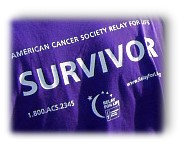
 I can't tell you what an emotionally draining and yet life affirming experience that was for me. Especially that first walk when my hair was just starting to grow back. When we released all those purple balloons into the air in dedication and memory of those who didn't survive their ordeal with cancer, it really got to me. And made me that much more thankful to God, my family, and my doctors that I am still alive and now cancer free.

Thanks so much for visiting with us today and for sharing your story. And thank you for Running on Pink.

Lynne-
Thank you, Lilly. I’m so thankful to you that you’re sharing your experience and helping raise awareness.
FIRST DATE
www.thewilderroses.com
AFTER HOURS
www.thewilderroses.com
http://LynneRoberts.net 
 
Lilly-
Thanks for walking for the cure!